
In a move that’s part botanical marvel, part aviation revolution, Canada’s Hempearth is building what could be the most eco-friendly aircraft ever—crafted from 100% industrial hemp and powered by hemp-derived biofuel. This isn’t just a prototype; it’s a flying statement on sustainability. Let’s dive deeper into this innovation and what it means for our future skies.
Advertisements
Why Hemp? Strength, Versatility & Sustainability
Industrial hemp, the non-psychoactive cousin of cannabis, brings massive benefits:
- Incredible strength-to-weight ratio: Hemp composites are up to 10× stronger than steel and rival or outperform fiberglass in tensile and compression tests .
- Eco-friendly growth: Low water use, no pesticides, and the ability to recondition soil make hemp a sustainable powerhouse .
- Natural carbon capture: Hemp plants actively sequester CO₂, helping offset emissions .

Anatomy of the Hemp Plane
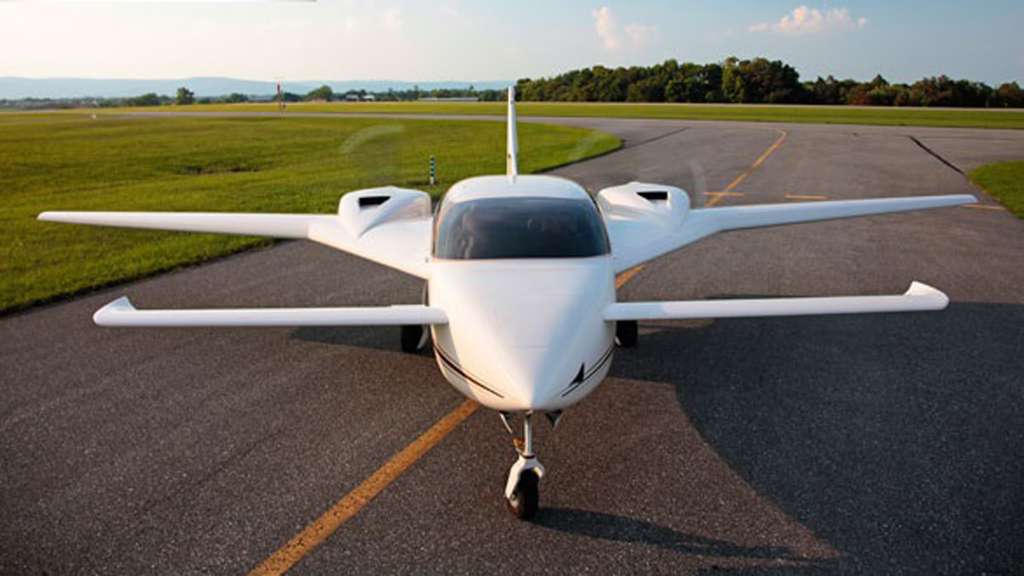
Hempearth’s aircraft is a sleek, twin-engine machine with a 36-foot wingspan, seating for one pilot plus four passengers. Nearly every structural part—wings, fuselage, seats, cushions, walls—is made from their proprietary hemp composites .
Three patent-pending weaves:
- Twill weave – flexible yet strong for small molded parts .
- Plain/uni weave – smooth finish for outer layers requiring paint .
- Double-bias weave – flat panels, thicker structural components like wings and firewall.
Advertisements
This layered approach allows engineers to tailor strength, flexibility, and weight like never before—a true composite reimagined.
Fueling with Hemp
The aircraft doesn’t just look green—it flies green. Powered by 100% hemp-derived biofuel (Hemp Jet A or biodiesel), it eliminates reliance on fossil fuels. Hemp-based fuel offers renewability and a smaller carbon footprint .
Performance & Timeline
- Cruising speed: ~210 mph, matching light twin-engine aircraft .
- Wingspan: approximately 36 feet (11 m) .
- Capacity: pilot + four passengers .
- Projected maiden flight: at the Wright Brothers Memorial in Kitty Hawk, North Carolina—the birthplace of modern aviation .
Beyond Aviation: A Plant-Powered Vision
This hemp aircraft is just the beginning. Hempearth has been developing 100% hemp composites since 2018 alongside partners in Montreal and Australia, with applications spanning boats, cars, phones, and even lawnmowers .
Advertisements
Hemp has over 25,000 known uses, from textiles and bioplastics to construction materials (hempcrete) and biofuels . Henry Ford even built a hemp-based car in the 1940s with ten-times-stronger panels than steel—it wasn’t just industrial curiosity; it’s proven history .
Why This Matters
- Lower carbon footprint: Hemp grows rapidly, needs little water, fixes CO₂, and creates minimal environmental damage compared to mining or petrochemicals.
- End-of-life recyclability: Unlike fiberglass or carbon fiber, hemp composites are biodegradable or recyclable—something aerospace desperately needs .
- Industrial independence: Transitioning away from oil-based supply chains toward agriculture-based ones empowers local economies and strengthens supply resilience.
What’s Next?
Advertisements
- Prototype assembly & structural load testing using the three weaves.
- Ground testing of hemp biofuel compatibility and engine performance.
- Maiden flight—potentially in the next year—marking a historic pivot for green aviation.
- Scaling up: If successful, hemp composites could revolutionize light aircraft manufacturing—and beyond.
The Future of Flight May Grow in a Field
Hempearth’s hemp aircraft isn’t just a novelty—it’s a prototype with purpose. And while the world’s first flight is symbolic, the implications reach far beyond hemp itself: it demonstrates that green materials can stand up to steel and fiberglass while flying farther and cleaner.
Imagine a world where cars, boats, planes, even buildings are made not of steel and plastic—but of plants. That runway ahead? It might just sprout green.
Interested in Supporting?
- Hempearth is open to investment opportunities.
- Crowdfunding or sponsorship could help bring the prototype to air.
- Their ongoing research in hemp composites is public and expanding—great entry points for industry partnerships.
Final thought: This hemp aircraft defies expectations—not just for what it’s made of, but for what it represents. It merges innovation with sustainability, acknowledging that the best materials may come not from mines or labs, but fields under the sun.
Next time you think of flight, picture leaves, fibers, and fields—because the future of flight might just be grown, not mined.

