
For years, an intriguing idea has floated around the internet: what if certain flat-topped mountains were not just rock formations, but the petrified stumps of ancient, colossal trees? Among the locations that fuel this imagination is the Jugurtha Tableland in northwestern Tunisia — a dramatic mesa rising nearly 600 meters (around 2,000 feet) above the surrounding plains.
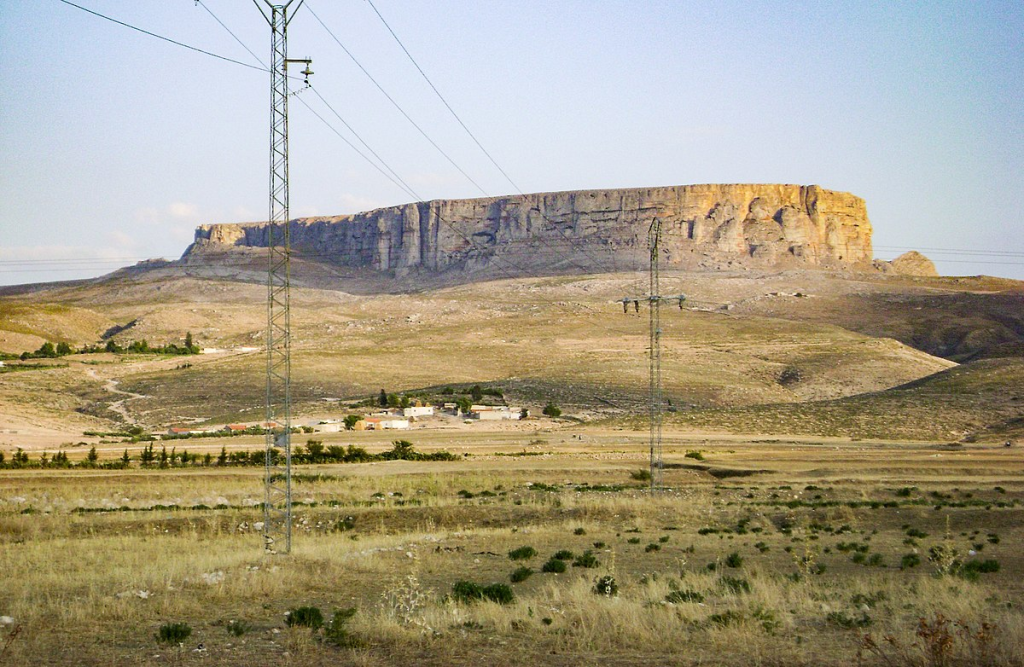
Its sheer cliffs and level summit give it a silhouette that almost looks as though it was cleanly cut, much like the cross-section of a massive trunk. The resemblance has inspired countless social media posts comparing it to a remnant of some lost prehistoric forest. But while the idea makes for an incredible mental image, the true story is even more fascinating.
Advertisements
Where Earth Meets Sky
Located near the town of Kalaat es Senan, the Jugurtha Tableland measures roughly 1,500 meters (4,900 feet) in length and 500 meters (1,600 feet) in width, covering an area of around 80 hectares. From a distance, it appears almost otherworldly — a vast plateau suspended above the plains, its sides falling away in steep limestone walls.
The journey to its summit reveals a windswept expanse with panoramic views stretching across the Tunisian landscape. Here, nature and history intertwine in ways that feel timeless.
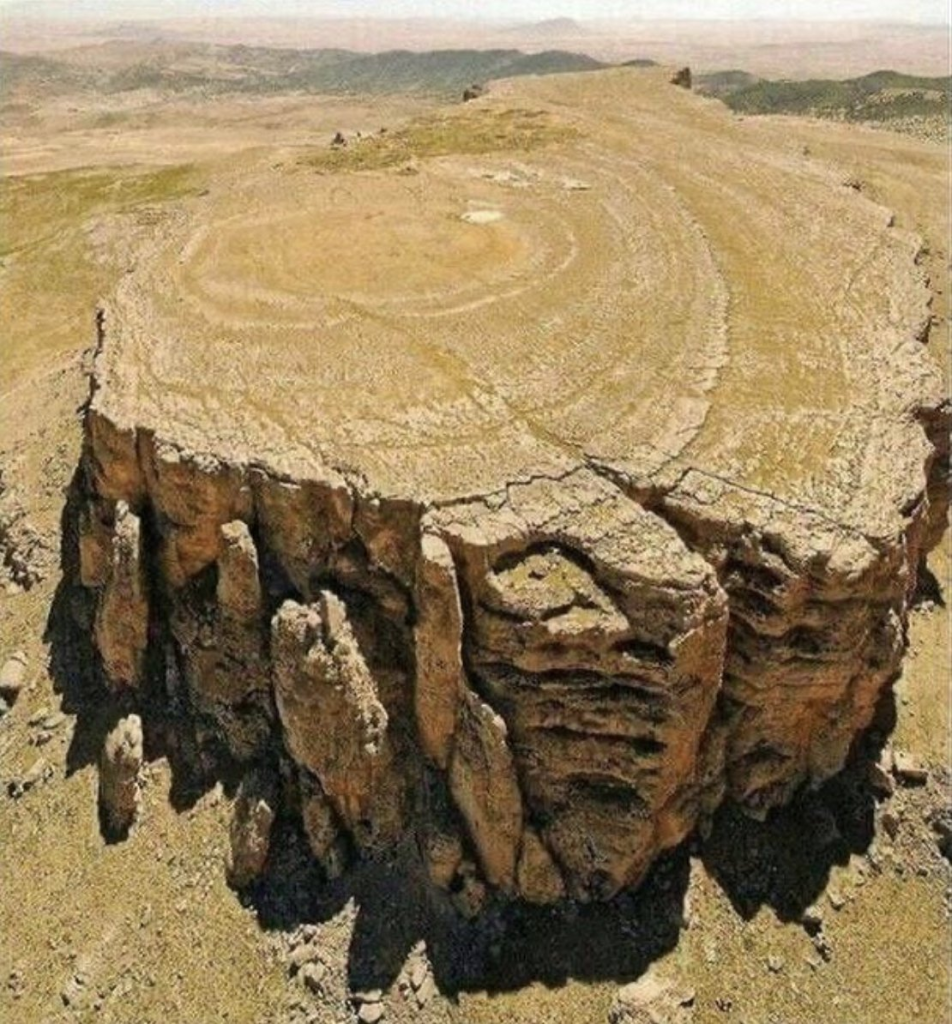
Not a Tree, But a Masterpiece of Erosion
Despite the stump-like shape, the Jugurtha Tableland is not petrified wood. Geologists have long understood it as a mesa — a landform shaped by erosion. Millions of years ago, this region was covered by layers of sedimentary rock, with a hard limestone cap over softer underlying materials. Over time, wind and water eroded the softer layers away, leaving the resistant limestone intact.
Advertisements
This process created what’s known as inverted relief: the once-low valley floor now stands higher than the land around it. It’s a natural phenomenon that can be seen in deserts, badlands, and other rugged terrains across the world.
A Fortress in the Sky
The tableland’s imposing position has made it a natural stronghold for centuries. Historical accounts suggest that as early as 200 BC, King Masinissa — ruler of Numidia — recognized its defensive potential. Later, between 112 and 105 BC, King Jugurtha fortified the plateau to resist Roman forces. Even today, remnants of ancient stairs carved into the rock are visible, silent witnesses to its military past.
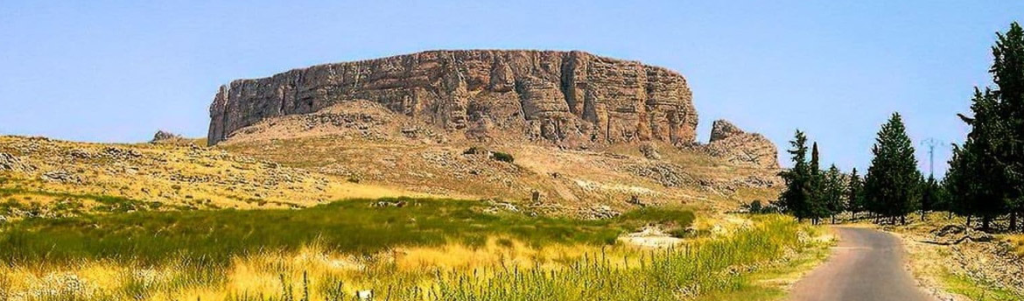
In the 18th century, a local leader named Senan restored its defenses during a period of rebellion, which is why the nearby town is called Kalaat es Senan — meaning “Fort of Senan.”
The Origin of the “Ancient Tree” Myth
Advertisements
So why do so many people believe mesas like this could be giant tree stumps? The answer lies in human imagination and the power of visual suggestion. The perfectly flat top, vertical cliff faces, and overall cylindrical profile bear a striking resemblance to a cut log. Pair that with humanity’s fascination for lost civilizations and forgotten Earth histories, and the myth practically writes itself.
However, there is no scientific evidence — no fossilized wood, no growth rings, no cellular structure — to support the idea. Instead, every study points to sedimentary rock and natural erosion processes as the true artists behind the mesa’s formation.
Why the Reality Is Just as Amazing
While the petrified-tree theory belongs to the realm of speculation, the reality of the Jugurtha Tableland’s formation tells a story spanning millions of years — a tale of Earth’s changing climate, shifting landscapes, and the raw power of erosion.
Standing at its edge, looking over the vast plains, one can appreciate that this “giant stump” is not the remnant of a single organism, but the enduring monument of geological time itself.
Final Thoughts
The Jugurtha Tableland captivates both the scientist and the dreamer. Whether viewed as a masterpiece of nature’s sculpting tools or imagined as the fossilized remnant of a mythical world-tree, it reminds us of the enduring beauty and mystery of our planet.

