
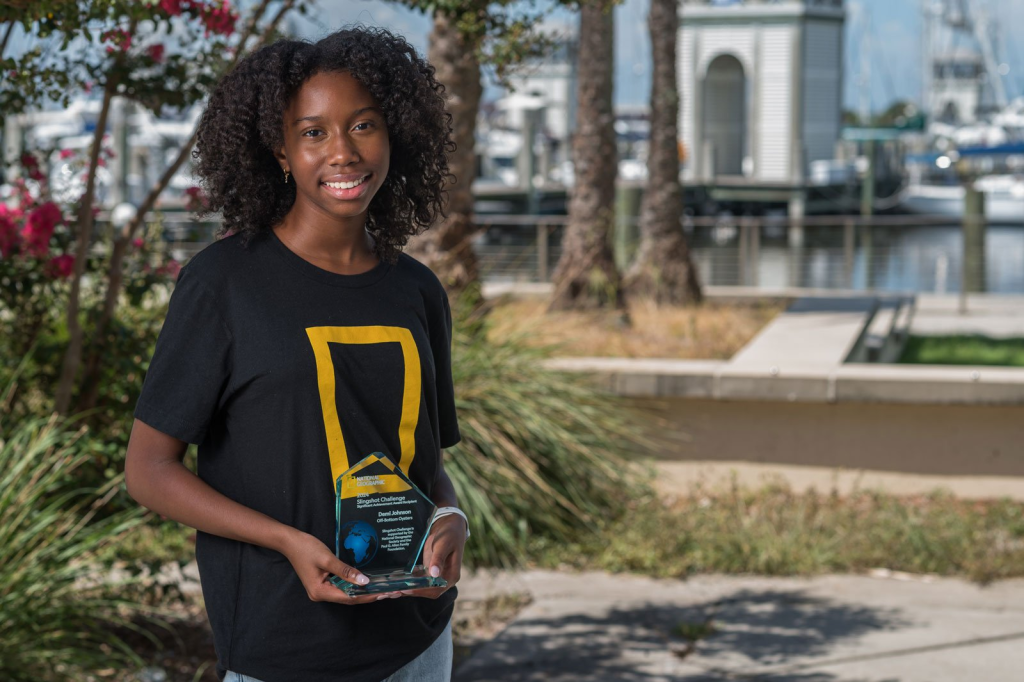
Meet Demi Johnson, a ninth-grader from Gulfport, Mississippi, who is quietly changing the health of her local waters. In seventh grade she learned that oysters do far more than end up on a plate. They filter water, build reefs, and help protect shorelines. That lesson became a personal mission. Demi launched a small restoration project that has already returned more than 1,000 oysters to the water, with many more on the way. Her story shows how steady work, good guidance, and a generous spirit can lift a whole community.
A Spark in Seventh Grade
Demi’s interest began with a simple classroom discovery. Oysters feed by filtering water. As they draw water through their gills they remove algae and fine particles, which clears the water and lets sunlight reach seagrasses. Seagrasses shelter young fish and crabs, which in turn support larger species and local fisheries. Over time oysters cluster on hard surfaces and create reefs that function like living breakwaters. These reefs soften wave energy and help hold sediment in place, which matters along a storm-prone coast.
That chain of cause and effect stayed with Demi. If a small shellfish could clean water, strengthen habitat, and even guard the shoreline, then adding more oysters could move the entire system in the right direction. She wanted to be part of that change near home.
How the Project Works
Demi joined a local oyster gardening effort that places cages of juvenile oysters under a pier. These cages keep young oysters safe from many predators while they grow. Her weekly routine is simple and consistent. She raises each cage, rinses off mud and algae, checks for snails or crabs, measures growth, and lowers the cage back to the right depth. When the oysters reach size, she helps move them from the cages to a designated reef site. There the oysters can live, reproduce, and add their shells to the growing reef.
This work is not glamorous. It means muddy boots, a wet deck, and a careful hand. It is also highly effective. By the end of her first season Demi had helped restore more than one thousand oysters. Each following season she refined her method, kept careful notes, and worked with educators and volunteers to improve the process.
Advertisements
Why One Thousand Oysters Matter
A restored oyster is a beginning, not an end. Mature oysters release eggs and sperm into the water during the warm season. A single oyster can produce a very large number of larvae. Most will not survive, yet the numbers are so great that many do settle on shells and rocks and begin to grow. Those young oysters thicken the reef and the cycle continues. Each new adult adds another natural filter to the water. Clarity improves, seagrasses return, and small fish and invertebrates find places to hide. The reef becomes a foundation for life.
The benefit also reaches the shoreline. Reefs break waves and slow currents, which helps reduce erosion. Along the Mississippi coast, where storms and water quality challenges have harmed reefs for years, this living infrastructure is worth rebuilding. One cage at a time, Demi’s project feeds a positive loop in which more oysters lead to more habitat and healthier water.
Mississippi’s Need and a Local Answer
The Gulf Coast has faced hard seasons. Severe storms, runoff, and other stressors have damaged oyster populations and the habitats that depend on them. In places where natural recovery would be slow, community efforts can speed the return. Oyster gardening is a practical tool because it puts living shell where it is needed and keeps it there long enough to gain strength. It also turns residents into caretakers of the places they love. Demi’s work is a strong example of citizen stewardship in action. It is local, repeatable, and directly tied to the health of her bayous.
Recognition and Generosity
In 2024 Demi entered National Geographic’s Slingshot Challenge, a global program for youth who propose solutions to environmental problems. Her entry, focused on off-bottom oyster gardening, stood out. She earned recognition and a 1,000 dollar award to support her work. Then she made a choice that says much about her character. She donated the full amount to the Mississippi Oyster Gardening Program so more cages and more young oysters could be raised by volunteers across the coast.
That same spirit earned her the Girl Scout Silver Award, one of the highest honors available to a Girl Scout her age. Her project also drew national media attention, including a segment on CBS’s The Visioneers, which profiles young people who are building practical answers to real-world problems. The feature brought her careful work under the pier to a wider audience and encouraged other students to start projects of their own.
The Science in Plain Language
Demi often explains her project in simple terms. Oysters are cleaners. By filtering water they remove the extra algae and particles that cloud bays and sounds. Clearer water helps underwater plants grow. Those plants shelter young fish and crabs. Oysters are builders as well. Their shells join together into reefs that give many species a place to live. Reefs also soften the blow of waves against the shore, which helps guard marsh edges and beaches.
That is why a small restoration effort can have large effects. It improves clarity, habitat, and shoreline resilience at the same time. The benefits arrive slowly but steadily, and they last if the reef keeps growing.
Advertisements
Challenges and What They Teach
Raising oysters is not without problems. Predators appear in the cages. Heavy rain can lower salinity in a bay and stress young oysters. High temperatures can slow growth. Storms can shift the bottom and fill cages with silt. Demi’s routine, and the advice of experienced gardeners and biologists, helps manage these risks. She has learned to keep a schedule, watch the weather, and adjust as needed. Her notes guide when to clean more often, when to raise or lower the cages, and when to plan a move to the reef site. These lessons are modest and practical, and they are exactly what makes a local project endure.
Education and Community
Demi’s project began as a personal effort and has grown into a community one. She speaks with classmates, neighbors, and visitors about what oyster gardening is and why it matters. The work is easy to understand. People can see the cages under the pier and the oysters growing inside them. They can hold a shell, feel the weight, and imagine that shell in a reef a few miles away. This makes the science real for students and adults. It also gives them a clear way to help. Some volunteer to tend cages. Others adopt a reef site or support a classroom program. Each role adds another thread to the net of care along the coast.
Looking Ahead
Demi plans to expand her project next season with more cages and a stronger education component. She wants to build a simple guide that teachers and waterfront homeowners can use to start their own small gardens. She hopes to create a path for younger students to try oyster husbandry, collect basic data, and present their findings. In time she wants to study environmental law so she can protect natural systems not only through hands-on work, but also through policy. The same patient habits that helped her raise oysters will serve her well as an advocate. She has learned to gather facts, listen to people with experience, and act with the long term in mind.
How Readers Can Help
Anyone can support work like Demi’s. Learn about your local watershed and the programs active in it. Volunteer with an oyster gardening group or a marsh planting team, or attend a training session at a nearby nature center. Reduce fertilizer and chemical runoff at home. Dispose of used oil and paint at proper facilities. Support science education in local schools. If you live on the water, consider joining a citizen science project. Small choices add up. The health of a bay or sound reflects the care of all who live around it.
A Clear Example of Hope
Demi Johnson’s story is not about luck or special access. It is about steady effort, respect for good guidance, and a strong wish to give back. She took a simple idea, raised it with care, and shared the results with others. The oysters she has restored are back at work filtering water and building the reefs that protect the coast. Her donation ensures that more volunteers will join her. Her public recognition carries a message to students across the country that they have a role to play in restoring the places they call home.
Advertisements
When passion meets purpose the results need not be loud to be real. A teenager with a few cages under a pier can help a coastline heal. A classroom lesson can become a living reef. The path from curiosity to stewardship is open to anyone who is willing to start, keep a schedule, and learn as they go. Demi’s work reminds us that the coast is not only a place to visit. It is a living system that needs neighbors, and it has found one in her.
Closing
As Demi heads into another season she carries more than cages and notebooks. She carries a clear sense of what careful work can do. The oysters will grow, the reefs will thicken, and the water will clear. The shore will be a little stronger. The community will be a little more connected to the waters that support it. That is a worthy outcome for any citizen. It is remarkable coming from a ninth-grader who simply decided to help.

