
Migaloo: The White Whale That Started It All
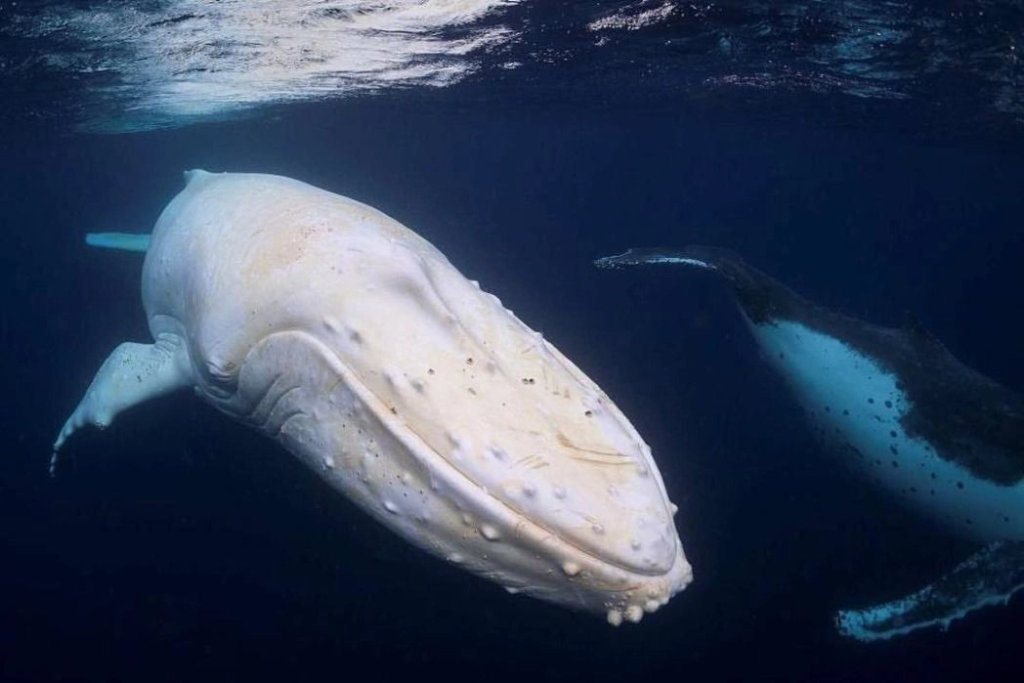
If you spend time on Australia’s East Coast in winter, you will hear one name again and again: Migaloo. First recorded in the early 1990s, his pale body is the result of albinism, which removes pigment from the skin. Against blue water he looks almost luminous. That is why people travel to headlands and book boats each year hoping for a glimpse.
Advertisements
Meet MJ, the “Junior” Many Talk About
Years later, an all-white calf was spotted during the migration and quickly nicknamed MJ, short for Migaloo Junior. No one knows for sure if there is a family link. MJ has a small darker mark that suggests leucism rather than full albinism. Labels aside, seeing a mostly white calf alongside its normally colored mother is unforgettable.
Why Some Whales Are White
Most humpbacks are gray to black with pale bellies. Albinism removes pigment entirely, while leucism reduces pigment and leaves scattered patches of normal color. This is why Migaloo is fully white, while MJ has one darker mark.
When to Look: The Migration Calendar
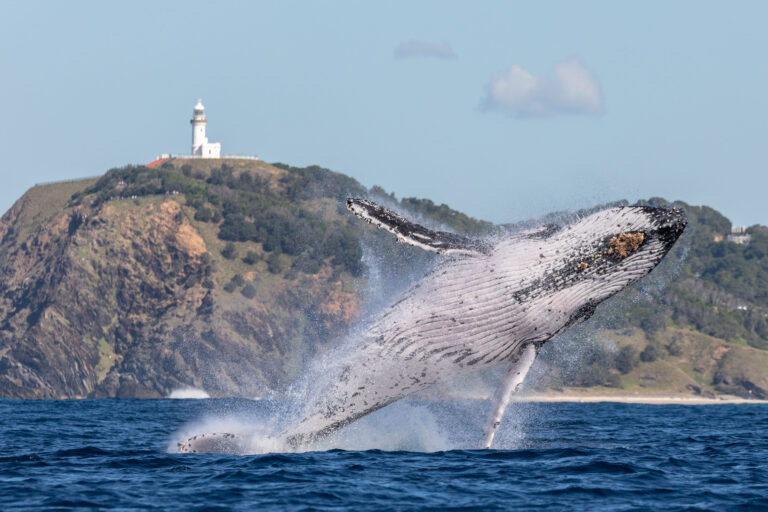
The East Coast migration follows a steady pattern each year:
- Northbound to tropical waters: June to August
- Southbound with mothers and calves: September to November
Plan around these windows and your chances rise.
Advertisements
Where to Watch from Land
Byron Bay, NSW
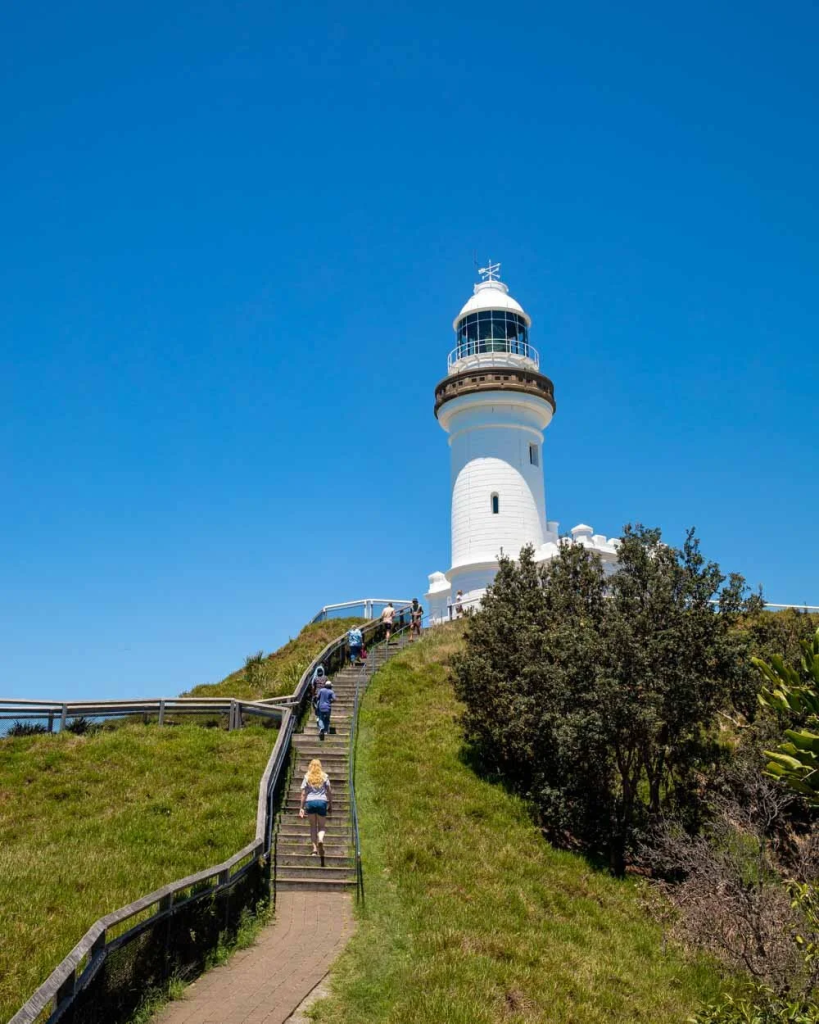
The lighthouse at Cape Byron is a classic lookout on Australia’s most easterly point.
Sydney, NSW
Cape Solander in Kamay Botany Bay National Park offers high vantage points and regular sightings.
Hervey Bay, QLD
Protected by K’gari, the bay is calm and welcoming for mother-calf pairs. July through October is peak season.
Gold Coast and Sunshine Coast, QLD
Headlands and licensed cruises in these areas are popular during both migration legs.
How to Give Yourself the Best Chance
- Go early on clear, calm mornings for the best visibility.
- Choose a high viewpoint to scan for blows and splashes.
- Learn the signs: watch for the blow, dorsal fin, then tail.
- Be patient—activity often comes in bursts.
Boat or Land: Choosing Your Approach
Land-based watching is simple and free. If you prefer a boat, pick a licensed operator with experienced guides. Hervey Bay is one of the best family-friendly options because of calm seas and playful calves.
Advertisements
A Quick Note on Sightings
Migaloo and MJ do not always appear every season, and long gaps are normal. The wider migration is the true show, with thousands of whales passing each year. But if a flash of white suddenly surfaces, you will know instantly.
Etiquette and Safety on the Water
Australia enforces strict approach distances for whales. Special larger exclusion zones apply to predominantly white whales like Migaloo. Always follow local rules, keep your distance, and allow whales to approach on their terms.
What You Might See
Breaches, tail slaps, spy-hops, and fin waves are common. Calves often imitate their mothers, leading to playful displays. Even a distant blow can feel magical, while a full breach is unforgettable.
Advertisements
Trip Planner at a Glance
- Best months northbound: June to August
- Best months southbound: September to November
- Top land lookouts: Cape Byron Lighthouse, Cape Solander
- Best family boat base: Hervey Bay (July–October)
Closing Thought
A white whale on a blue sea feels almost unreal. Yet each year, the migration returns, and people gather along the coast to watch. With a bit of planning and patience, you may leave with a story you’ll retell for years.

